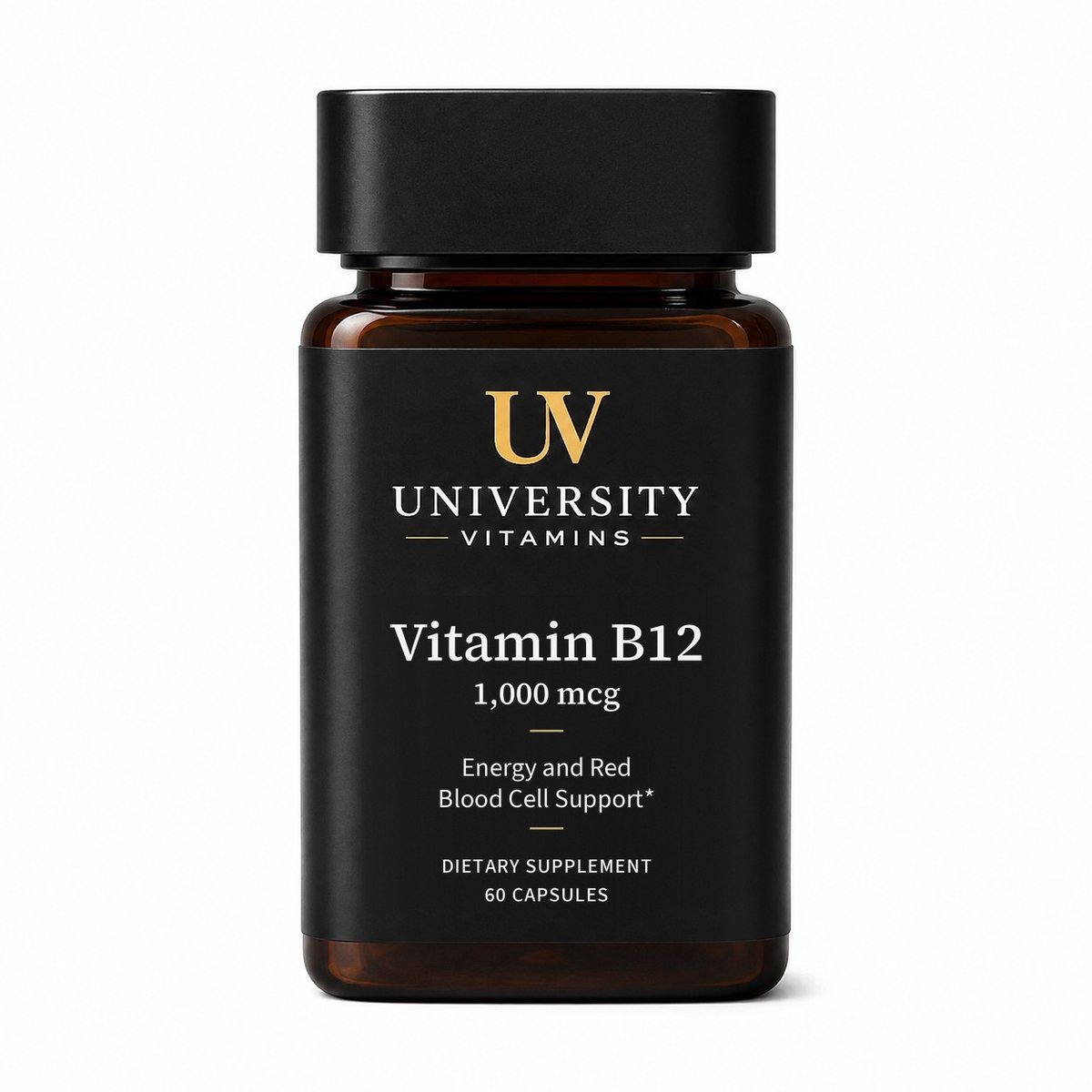
Description
Contributes to normal red blood cell formation, normal nervous system function, normal homocysteine metabolism, and the reduction of tiredness and fatigue.
How It Works
Methylcobalamin is the cytosolic cofactor for methionine synthase, which remethylates homocysteine to methionine. Adenosylcobalamin is the mitochondrial cofactor for methylmalonyl-CoA mutase. Two enzymes, two compartments, two different coenzyme forms.
Why This Form
Both active coenzyme forms, because they are not interchangeable. Cyanocobalamin, the industry default, requires intracellular conversion into both and releases a cyanide moiety in the process. It is used because it is cheap and shelf-stable, not because it performs better.
What we rejected: Cyanocobalamin.
The Research Behind It
Human trials measuring serum B12, holotranscobalamin, methylmalonic acid and homocysteine response across cobalamin forms.
What The Evidence Does Not Show
Correcting a low B12 status improves these markers. In people with adequate status the trials do not demonstrate additional benefit, and we do not imply otherwise.
Supplement Facts
| Per Serving | Amount | % DV |
|---|---|---|
| Vitamin B12 (as methylcobalamin) | 1,000 mcg | 41,667% |
| Vitamin B12 (as adenosylcobalamin) | 500 mcg | 20,833% |
† Daily Value not established. Percent Daily Values are based on a 2,000 calorie diet.
Other Ingredients
Microcrystalline cellulose (bulking agent), plant-derived capsule shell.
Every ingredient in this product is listed above. We use no proprietary blends, no titanium dioxide, no artificial colours and no artificial sweeteners. Our Sourcing Standard →
References
A numbered reference list for this formulation is in preparation. In the meantime, you can review the published human trial literature directly:
These statements have not been evaluated by the Food and Drug Administration. This product is not intended to diagnose, treat, cure, or prevent any disease.
University Vitamins is an independent company. We are not affiliated with, endorsed by, or sponsored by any university or academic institution. Institution names appear solely to identify the source of the research referenced.
Reviews
There are no reviews yet.